The short answer
- Single-needle machines are compact, much less expensive and ideal for hobby work and one-off personalization. You rethread for every color.
- Multi-needle machines hold 6 to 15 colors, switch between them automatically, accept cap frames, and list higher top speeds. They cost thousands of dollars, weigh 80–350+ lb and need dedicated space.
If you'll embroider multi-color designs in batches, or structured caps, multi-needle is the practical choice. Otherwise a good single-needle machine will serve you well for years.
How each type works
Single-needle
One needle, one thread color at a time. When the design calls for the next color, the machine stops and waits for you to change the thread. Most single-needle machines have a flatbed embroidery arm that moves a hoop on the table in front of you. That's ideal for flat items such as towels, quilt blocks and shirts you can lay flat.
Multi-needle
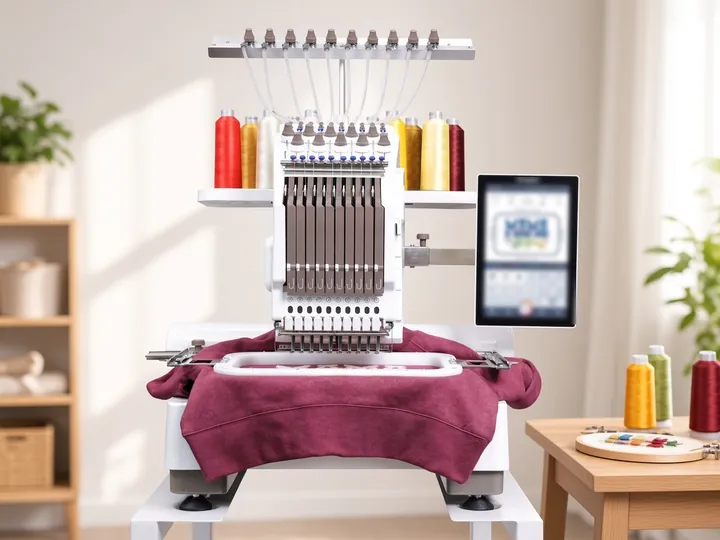
A row of needles (the needle bar), each threaded with a different color. The machine moves the right needle into position automatically, so a 6-color design runs start to finish without you touching it. Multi-needle machines are built around a tubular (free-arm) design: the hoop wraps around a narrow arm, so you can embroider caps, sleeves, bag fronts and finished garments without stitching through the back.
The in-between options
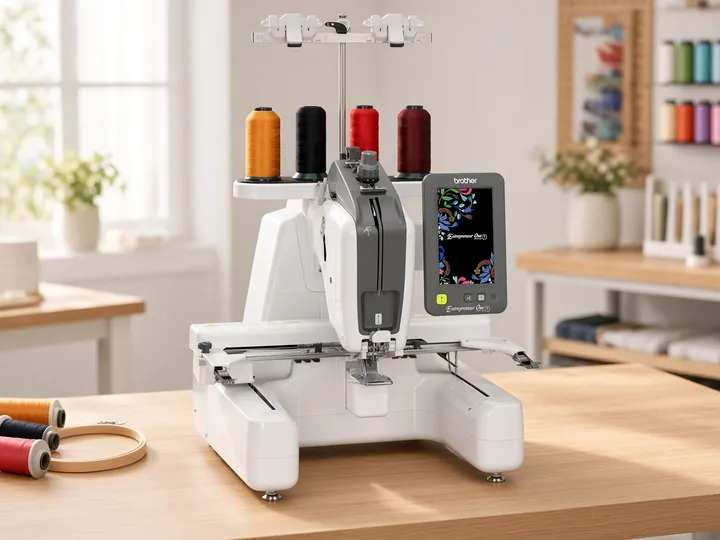
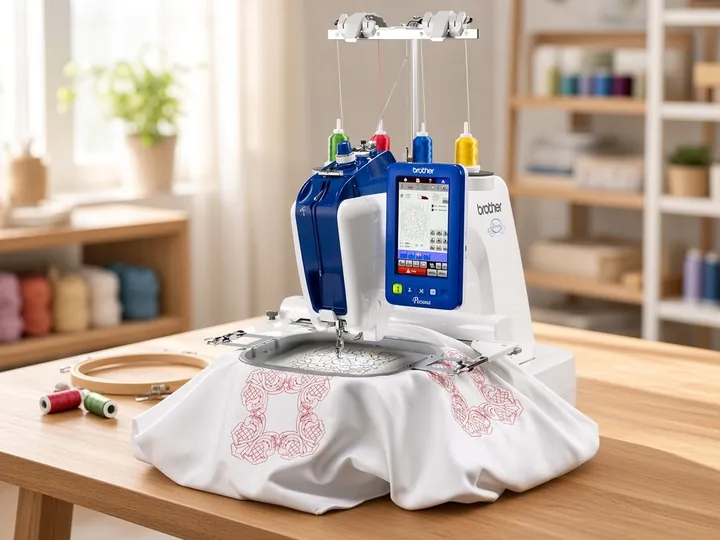
- Brother's Brother Entrepreneur One PR1X and Brother Persona PRS100 are single-needle machines with a tubular free arm, 1,000 spm top speed and cap frame support.
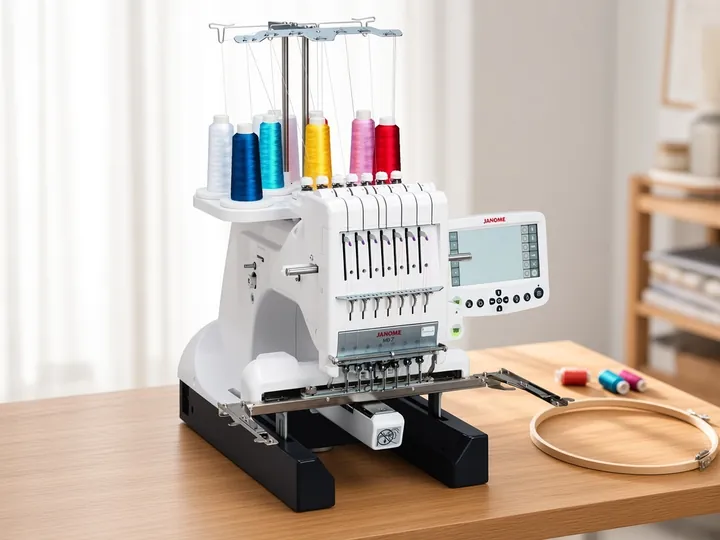
- Janome's Janome MB-7 is a 7-needle machine that Janome describes as designed for home use.
Side by side: typical specs
| Single-needle home | Multi-needle | |
|---|---|---|
| Color changes | Manual, every color | Automatic (6–15 colors loaded) |
| Listed max speed (our database) | About 400–860 spm | About 800–1,200 spm |
| Max field (our database) | 4" x 4" up to about 7.9" x 15" (Poolin EOC07) | About 9.4" x 7.9" (Janome MB-7) up to 400 x 600 mm (Smartstitch S-1501 Plus) |
| Structured caps | Not listed on home models | Cap frame or cap driver listed |
| Weight | Light enough to lift for many home models (Brother lists about 14 lb for the PE545) | About 50 lb (Janome MB-7) to around 209 lb (Smartstitch S-1501) |
| Typical file format | Brand formats (PES, JEF, VP3), some read DST | DST (often plus DSB or brand formats) |
| Approx. price (listings we checked) | Under $500 to about $3,000 | About $3,000 to $15,000 |
Maximum speeds are what the manufacturers list. Actual stitching speed depends on the design and fabric, and on caps both Brother and Poolin quote lower speeds than for flat work.
Where the time actually goes
People often focus on stitches per minute, but on a single-needle machine, color changes and re-hooping usually take more of your time than stitching. A simple example: a 5-color design on 12 tote bags means 60 thread changes on a single-needle machine. On a multi-needle machine you thread 5 needles once. Add re-hooping each piece and the gap widens further, which is why business users pick multi-needle machines even when the per-stitch speed difference is modest.
For one-off gifts, the math flips. Changing thread a few times is no burden, and a single-needle machine is quieter, smaller and far less expensive.
The downsides of multi-needle machines
- Cost. The multi-needle machines in our database start around the $2,000–$4,000 band in the listings we checked, and a full setup with hoops, cap frames, a stand and software adds more.
- Size and weight. Ricoma lists 99 lb for the EM-1010 and 106 lb for the Creator. Smartstitch lists about 209 lb for the S-1501.
- Noise. Smartstitch quotes 60–75 dB depending on the model.
- Learning curve. Threading and tensioning many needles, assigning colors to needles (DST files don't carry color information) and routine maintenance all take practice.
- Flat items take adjustment. A tubular arm is great for garments and caps, but large flat items such as quilts need the right frames and support.
The downsides of single-needle machines
- Manual color changes on every design.
- No structured caps on home models.
- Finished garments are awkward. With a flatbed arm, hooping a sleeve or the front of a zipped jacket without catching the back takes care.
- Smaller fields at the low end, typically 4" x 4" or 5" x 7".
What a day with each type looks like
Single-needle
You hoop the item with stabilizer, load the design, thread the first color and start. When the machine stops for a color change, you rethread, trim any tails if your machine doesn't, and restart. When it finishes, you unhoop, trim and repeat for the next piece. It's a hands-on rhythm that suits one-off pieces and people who enjoy the process.
Multi-needle
You set up once: load your colors on the needles, tell the machine which needle stitches which color in the design, and test-stitch. Then the job becomes a loop of hoop, load, start and unhoop, and the machine handles every color change. Many shops buy extra hoops so they can hoop the next piece while the current one stitches, which keeps the machine busy.
Total cost checklist for a multi-needle setup
Before comparing headline prices, list what each package actually includes:
- Hoops and frames. How many sizes come in the box? Ricoma lists 4 hoops with the EM-1010 and 5 with the Creator; Poolin lists 6 hoop sizes, including a cap hoop, for the EOM.
- Cap system. Included, or an add-on?
- Stand or table. Ricoma notes the EM-1010 stand is sold separately.
- Software. Is lettering or digitizing software included, or will you buy it or pay a digitizing service?
- Warranty and support. Length of coverage and whether service is local, mail-in or remote.
- Delivery and setup. Heavier machines may ship by freight and need help to move into place.
Maintenance basics
Any embroidery machine needs routine care: cleaning lint from the bobbin area, changing needles regularly, and oiling where the manual calls for it. Multi-needle machines multiply some of that work, with more needles, more thread paths and a rotary hook that commercial manuals typically ask you to oil frequently. Follow your specific machine's manual; schedules differ by model.
A common upgrade path
Many people start with a single-needle home machine, learn hooping, stabilizers and design basics, and move to multi-needle once orders or caps make it worthwhile. That isn't a wasted step: the single-needle machine stays useful for one-off pieces and testing designs. If you already know you'll sell multi-color work, though, going straight to multi-needle avoids buying twice.
Which should you buy?
| If you… | Choose | Examples to compare |
|---|---|---|
| Make gifts, personalize small items, learn the craft | Single-needle home | Brother PE545, Brother PE900, bernette b70 DECO |
| Want caps or sleeves but mostly one-color work | Pro single-needle | Brother Persona PRS100, Brother Entrepreneur One PR1X |
| Sell multi-color logos in batches | Multi-needle | Poolin EOM, Smartstitch S-1501, Ricoma EM-1010, Brother Entrepreneur PR680W |
| Want multi-needle convenience at home-machine scale | Compact multi-needle | Janome MB-7, Smartstitch S-1001, Ricoma Creator |
See every multi-needle machine on our multi-needle page, or run the Help Me Choose quiz.
FAQ
Do more needles mean better embroidery?
No. More needles mean fewer manual thread changes and more colors loaded at once. Stitch quality depends on digitizing, stabilizer, tension and hooping.
Is 6 needles enough?
For most logos, yes. With 10–15 needles you can leave your common colors loaded between jobs, which saves re-threading.
Can a multi-needle machine use home embroidery designs?
Usually, after converting to a format it reads (commonly DST). Many design shops sell DST directly.
Machines mentioned in this guide
 Brother Entrepreneur One PR1X8" x 12" · 1 needle
 Brother Persona PRS1008" x 8" · 1 needle
 Janome MB-79.4" x 7.9" · 7 needles
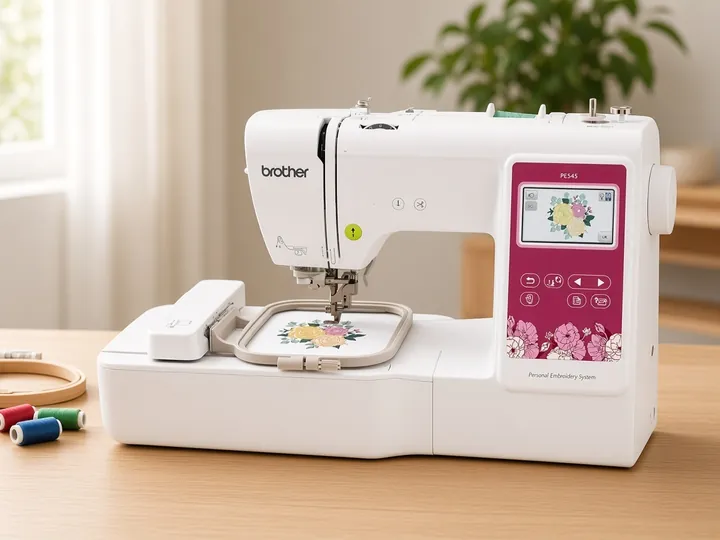 Brother PE5454" x 4" · 1 needle
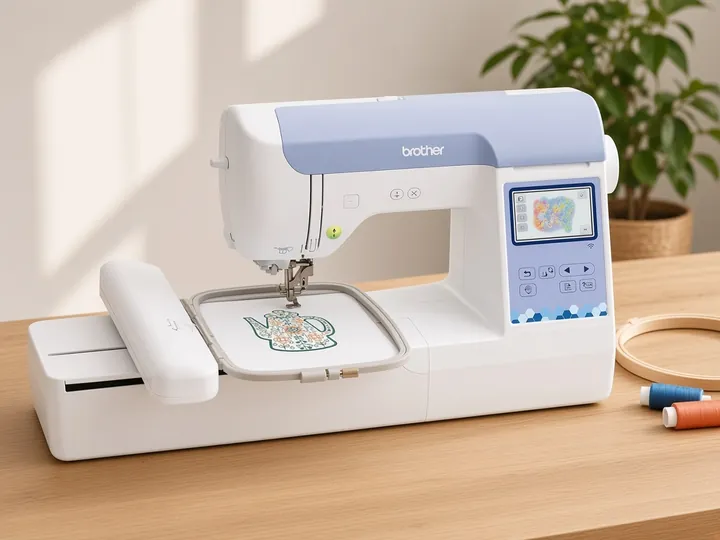 Brother PE9005" x 7" · 1 needle
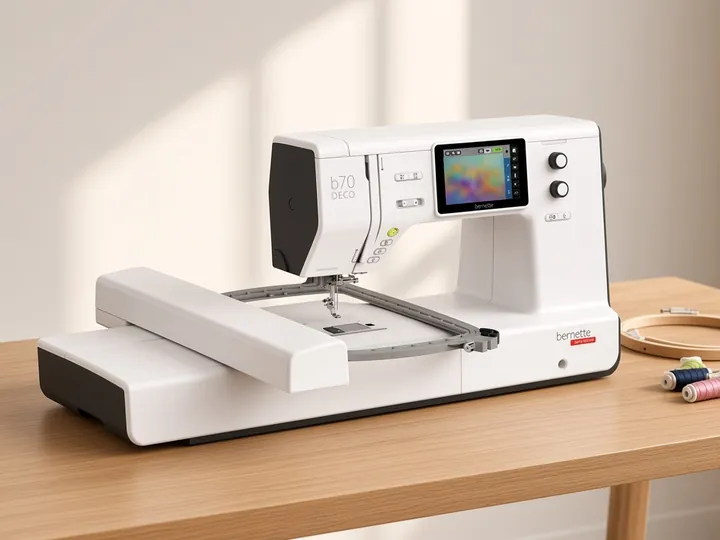 bernette b70 DECO10.2" x 6.3" · 1 needle
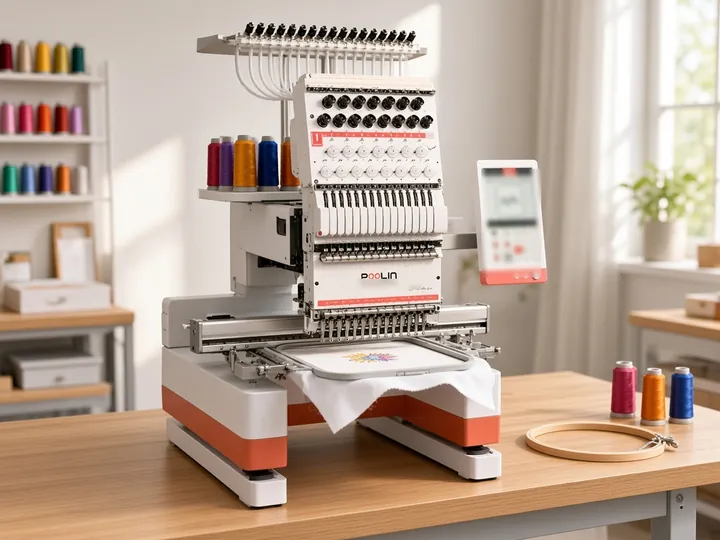 Poolin EOM36 x 24 cm · 15 needles
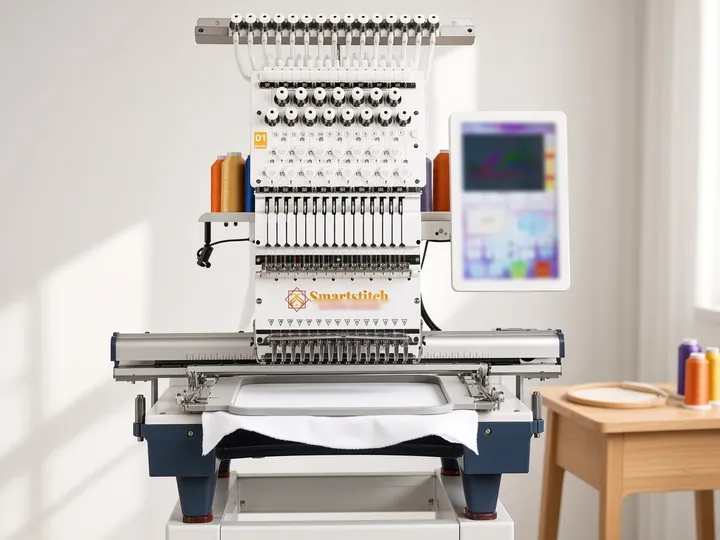 Smartstitch S-1501350 x 500 mm · 15 needles
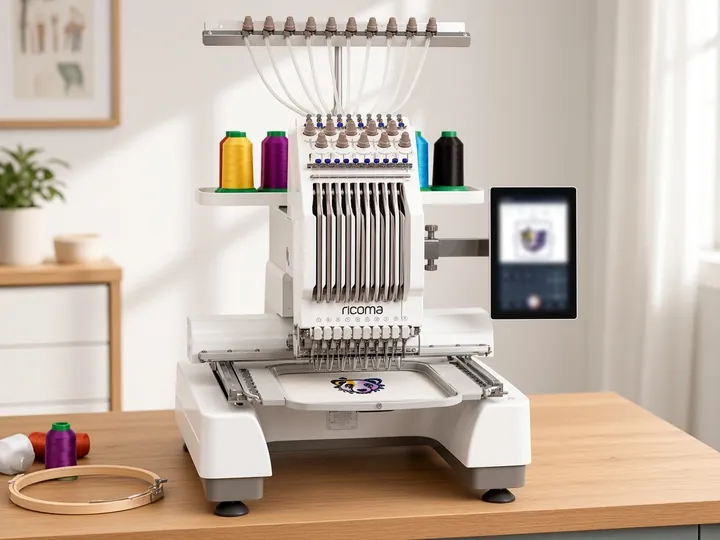 Ricoma EM-101012.2" x 8.3" · 10 needles
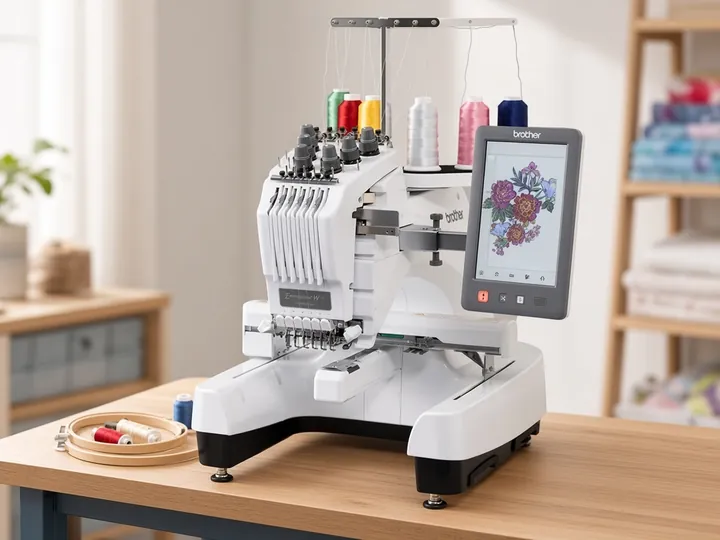 Brother Entrepreneur PR680W8" x 12" · 6 needles
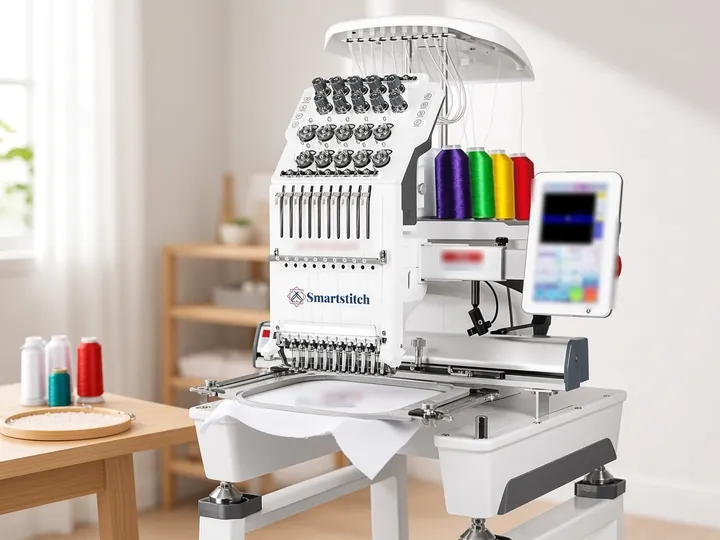 Smartstitch S-1001240 x 360 mm · 10 needles
 Ricoma Creator15" x 8.3" · 10 needles
Specs and price ranges were checked November 21, 2026 against manufacturer and retailer pages linked on each machine page. When you buy through our Amazon links we may earn a commission, which doesn't change what we include. Disclosure.