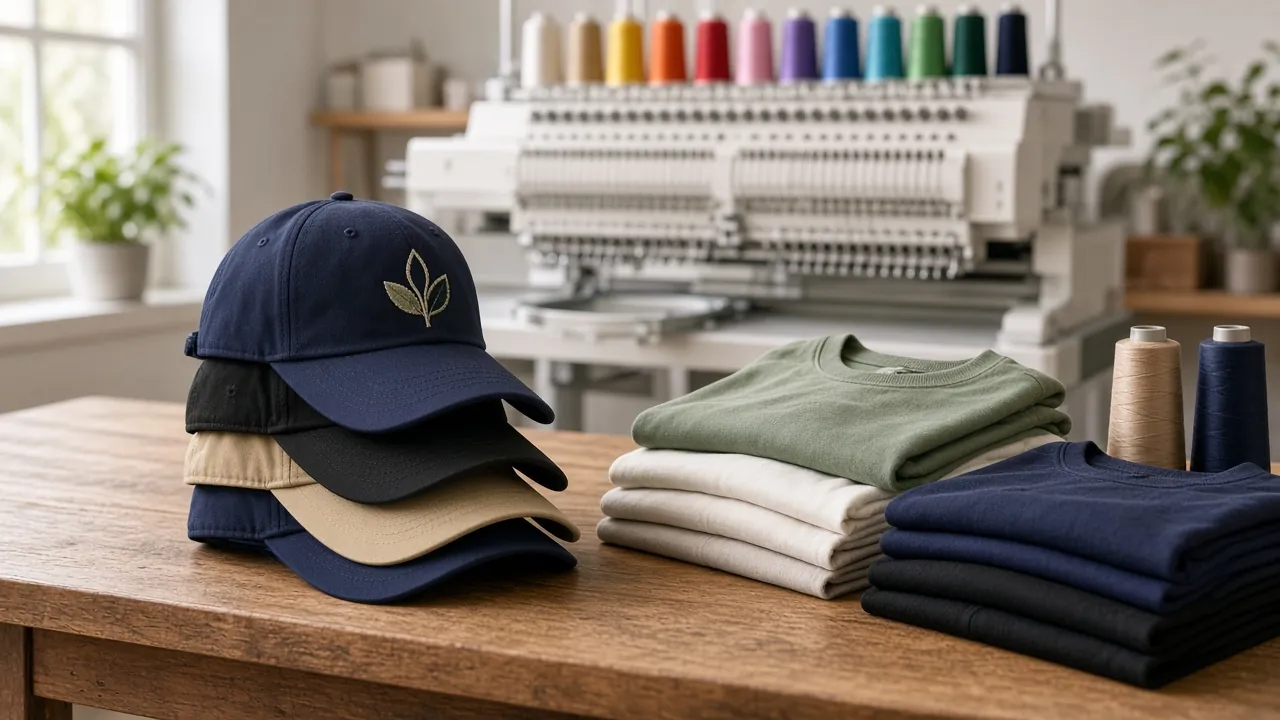
The short answer
If you'll sell embroidered items in batches, or want to embroider structured baseball caps, you're shopping for a machine that can do two things home machines generally can't: change thread colors on its own and accept a cap frame or cap driver. In practice that means a multi-needle machine, or one of Brother's pro single-needle machines with cap support.
Every machine below lists cap support on its manufacturer page:
| Machine | Needles | Max field | Caps | Formats | Approx. price | Shop |
|---|---|---|---|---|---|---|
| 15 | 36 x 24 cm (14.2" x 9.4") | Yes | DST, DSB | $2,000–$4,000 | Check Price on Amazon ↗ | |
| 10 | 240 x 360 mm (9.4" x 14.2") | Yes | Not listed | $2,000–$4,000 | Check Price on Amazon ↗ | |
| 12 | 300 x 400 mm (11.8" x 15.7") | Yes | Not listed | $2,000–$4,000 | Check Price on Amazon ↗ | |
| 15 | 350 x 500 mm (13.8" x 19.7") | Yes | DST, DSB | $4,000–$7,000 | Check Price on Amazon ↗ | |
| 10 | 12.2" x 8.3" | Yes | DST | $4,000–$7,000 | Check Price on Amazon ↗ | |
| 10 | 15" x 8.3" | Yes | DST | $4,000–$7,000 | Check Price on Amazon ↗ | |
| 6 | 8" x 12" | Yes | Not listed | $7,000–$15,000 | Check Price on Amazon ↗ | |
| 1 | 8" x 8" | Yes | Not listed | $2,000–$4,000 | Check Price on Amazon ↗ | |
| 1 | 8" x 12" | Yes | Not listed | $4,000–$7,000 | Check Price on Amazon ↗ |
Prices are approximate ranges from listings we checked on November 21, 2026. Commercial machines are often sold with bundles, stands, financing or extended warranties, so compare what's actually in the box, not just the headline price.
Why color changes decide it
A single-needle machine stops at every color change and waits for you to rethread. That's fine for a gift. For orders, the arithmetic gets ugly quickly:
- A 6-color logo on 24 shirts is 144 manual thread changes on a single-needle machine.
- On a 6-needle or larger machine you thread those 6 colors once, and the machine switches between them for all 24 shirts.
Listed top speeds also climb: home machines in our database list roughly 400 to 860 stitches per minute, while the multi-needles list 1,000 to 1,200. Treat those as maximums. Real working speed depends on the design, fabric and how dense the stitching is, and Smartstitch says as much on its own comparison page. In practice, eliminating rethreading saves more time than the speed difference.
The rule of thumb: if most of your designs are one or two colors and you make a handful at a time, a good single-needle home machine can support a small side business. Once you're doing multi-color logos in batches, a multi-needle machine pays for itself in time.
Embroidering hats: what you actually need
Structured vs unstructured
Structured caps (most baseball caps and trucker hats) have a stiff, curved front panel. You can't flatten them into a normal hoop, so the machine needs a cap frame or cap driver that holds the curved front and rotates it under the needle. Unstructured hats and beanies are softer. People do stitch these on home machines with extra hooping or "floating" techniques, but results take practice and are less consistent.
Cap support on the machines in our database
- Ricoma lists a 220° wide-angle cap system on the Ricoma EM-1010 and Ricoma Creator. Ricoma includes cap rings and a cap driver with these machines, according to its product pages.
- Smartstitch lists a 270° cap driver and a 280 x 75 mm cap embroidery area on the Smartstitch S-1501. Its comparison table lists a 75 mm maximum cap embroidery height on most models and 78 mm on the S-1501 Ultra and Plus.
- Poolin lists a dedicated cap hoop among the six hoop sizes for the 15-needle Poolin EOM, and quotes 850 stitches per minute on caps versus 1,000 flat.
- Brother lists cap frame capability on the Brother Entrepreneur PR680W, Brother Entrepreneur One PR1X and Brother Persona PRS100. On the PR1X and PRS100, Brother quotes 400–600 stitches per minute with cap frames. Check whether the cap frame is in the package: some Amazon bundles add Brother's PRCF3 cap frame and driver, which suggests it's often an add-on.
Wider rotation angles (270° vs 220°) let the machine reach further around the side of the cap. That matters if you want side-panel designs or wide wordmarks, and matters less for a centered front logo.
Cap design sizes
Cap front designs are usually much shorter than flat designs because of the crown's curve. Smartstitch's figure of 75 mm (about 3") maximum cap height gives a sense of the limit, and many front logos are designed shorter than that. Ask your customers for the size they expect, and digitize specifically for caps where possible; a flat design shrunk onto a cap often stitches poorly.
Flat field size for business work
Common jobs and the field they need:
- Left-chest logos fit comfortably in a 5" x 7" field. Every multi-needle machine here is far bigger.
- Full jacket and hoodie backs benefit from 8" x 12" or more. The Brother Entrepreneur PR680W lists 8" x 12", the Ricoma EM-1010 12.2" x 8.3", the Ricoma Creator 15" x 8.3" and the Smartstitch S-1501 350 x 500 mm.
- Oversized designs, blankets and banners push you toward the largest fields: the Smartstitch S-1501 Plus lists 400 x 600 mm and the Smartstitch S-1501 350 x 500 mm.
A larger field mostly matters if you'll actually sell large pieces. Bigger frames are also slower to hoop for small jobs, which is why these machines ship with several frame sizes.
Space, weight, power and noise
Multi-needle machines are equipment, not appliances. Before you order:
- Weight. Ricoma lists 99 lb for the EM-1010 and 106 lb for the Creator. Smartstitch lists about 86–114 lb for its compact 10- and 12-needle models and around 209 lb for the S-1501. You'll need a sturdy stand or table (Ricoma notes the EM-1010 stand is sold separately) and a plan for getting it into the room.
- Footprint. Ricoma lists 23.6" x 22" x 34.1" for the EM-1010, plus room for the thread tree and for hoops swinging out.
- Power. Ricoma lists 110V for these models. Smartstitch lists 80–260V rated input for the S-1501.
- Noise. Smartstitch quotes about 60–75 dB depending on the model. Plan for that if your workspace is in your home.
File formats and software
Commercial machines standardize on Tajima's DST format: Ricoma lists DST, Poolin and Smartstitch list DST and DSB, and Janome's 7-needle Janome MB-7 reads DST as well as Janome's own JEF formats. DST files store stitches but not thread colors, so you'll assign colors to needles at the machine.
For business work you'll almost certainly need digitizing: turning a customer's logo into a stitch file. You can learn digitizing software or pay a digitizing service per design. Either way, budget for it. Logos that look simple on screen often need careful digitizing to stitch cleanly, especially small text and caps.
Costs beyond the machine
- Extra hoops and frames, including magnetic hoops, which many shops add to speed up hooping.
- Cap frames or drivers if not included.
- Thread cones in your common colors, bobbins, needles, and several types of backing.
- Software or digitizing fees.
- A stand or table, and possibly a hooping station.
- Service. Ask who repairs the machine near you and what the warranty covers. Ricoma offers 1-year standard and 5-year premium warranty options on the machines we looked at; Brother lists a 2/6/25-year premium limited warranty on the PR680W.
Can you start a business with a single-needle machine?
Yes, for the right kind of work. Personalization (one-color names on towels, bags and baby gifts) is mostly single-color, small and one-off, so rethreading isn't a big burden. A 5" x 7" home machine such as the Brother PE900 can handle that. Brother's Brother Persona PRS100 and Brother Entrepreneur One PR1X sit in the middle: still one needle, but with a tubular free arm, 1,000 spm maximum and cap frame support.
Where single-needle breaks down is multi-color logos in batches and structured caps. If that's where you're headed, it's usually cheaper to buy the multi-needle machine first than to buy twice.
Small business FAQ
How many needles do I need?
Six handles most logos. Ten to fifteen means fewer re-threads between jobs because you can leave your most-used colors loaded. The machines in our database range from 6 (Brother PR680W) to 15 (Poolin EOM and Smartstitch's S-1501 models).
Can a home embroidery machine do hats?
Not structured caps. Home single-needle machines in our database don't list cap frames. Brother's PR1X and PRS100 single-needles and the multi-needle machines do.
Is a more expensive multi-needle machine faster?
Listed maximum speeds are similar (1,000–1,200 spm). Price differences tend to reflect field size, needle count, cap system, build, support and warranty rather than raw speed.
Do I need a dealer?
Not necessarily, but local service matters more for a machine you depend on for income. Brother and Janome sell pro machines through dealers; Ricoma, Smartstitch and Poolin sell direct and on Amazon.
Machines mentioned in this guide
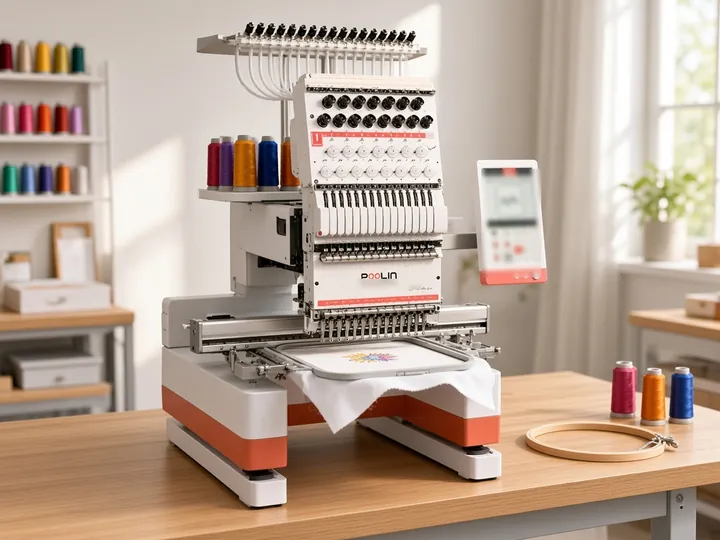 Poolin EOM36 x 24 cm · 15 needles
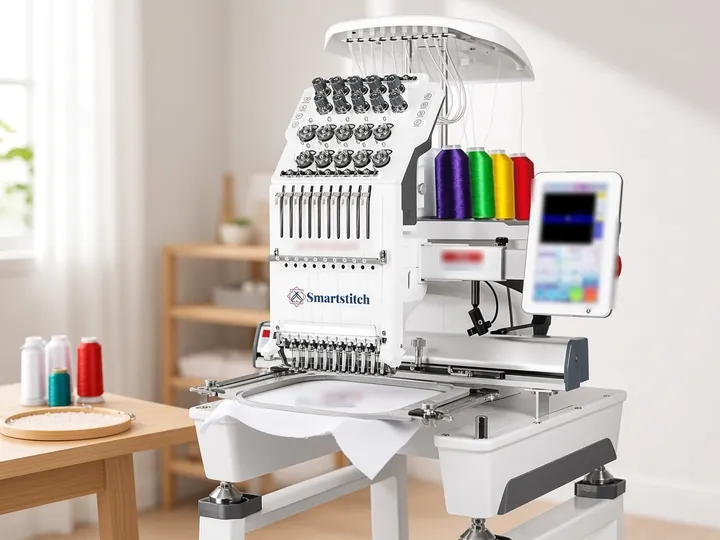 Smartstitch S-1001240 x 360 mm · 10 needles
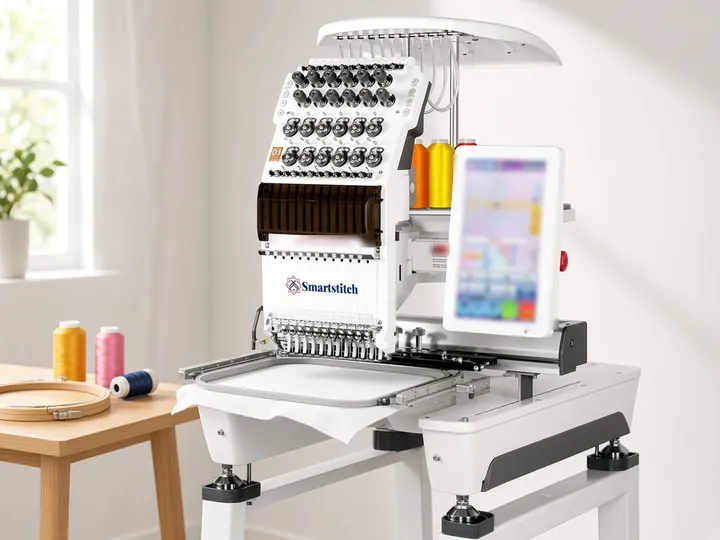 Smartstitch S-1201 Plus300 x 400 mm · 12 needles
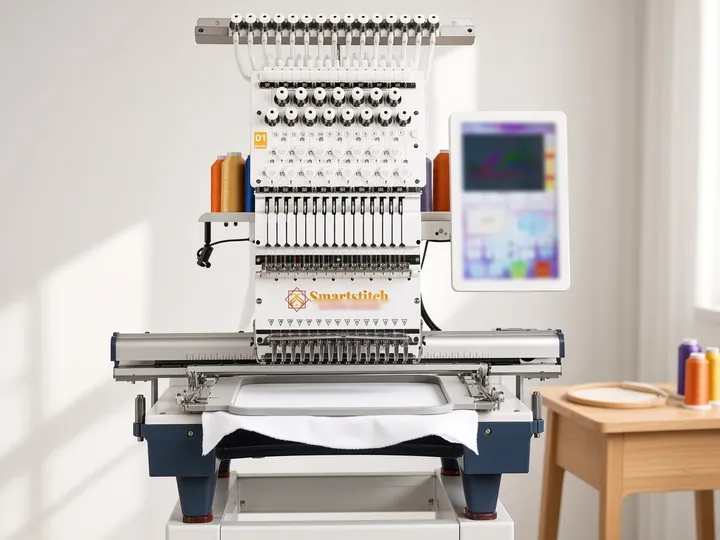 Smartstitch S-1501350 x 500 mm · 15 needles
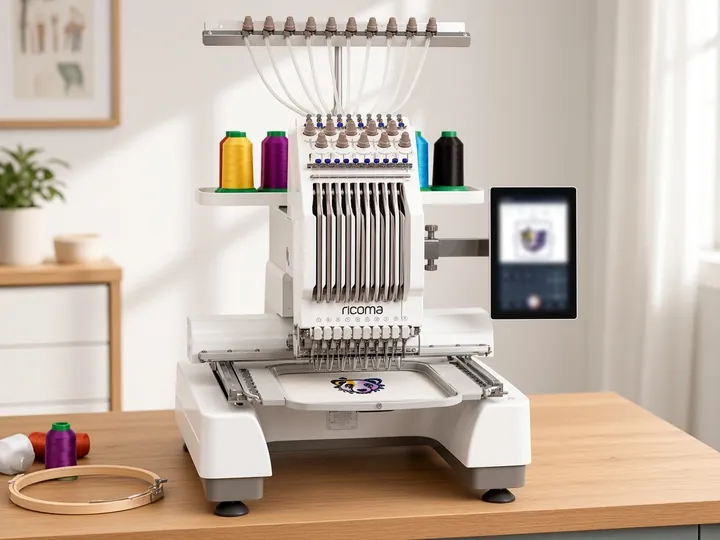 Ricoma EM-101012.2" x 8.3" · 10 needles
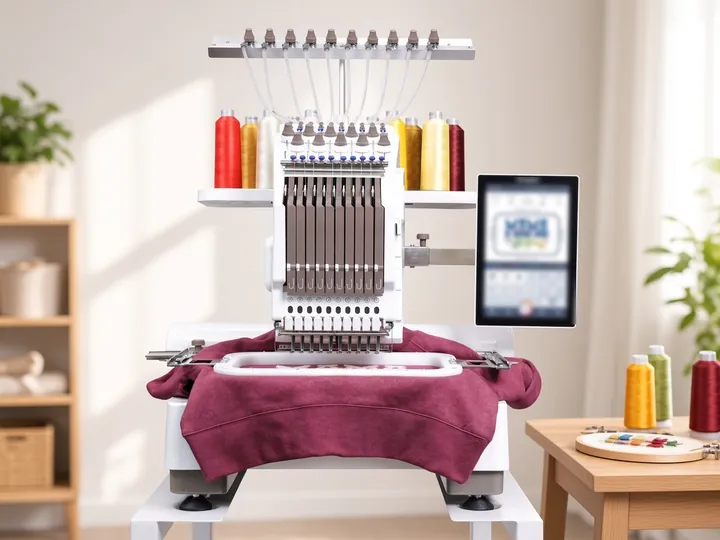 Ricoma Creator15" x 8.3" · 10 needles
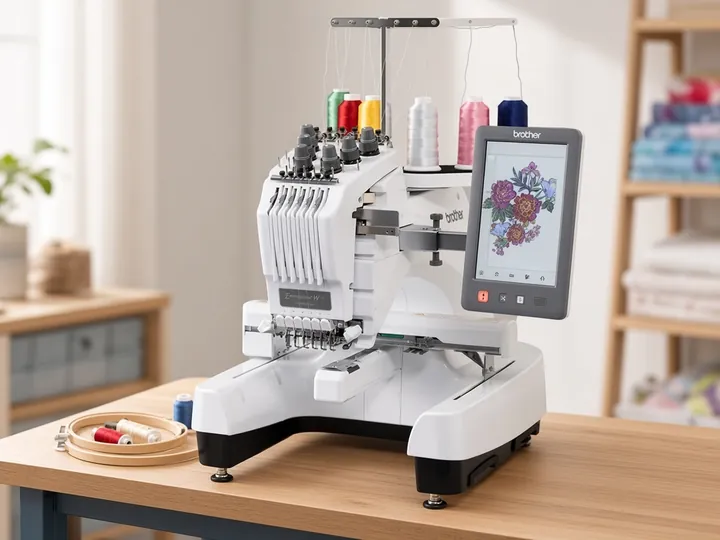 Brother Entrepreneur PR680W8" x 12" · 6 needles
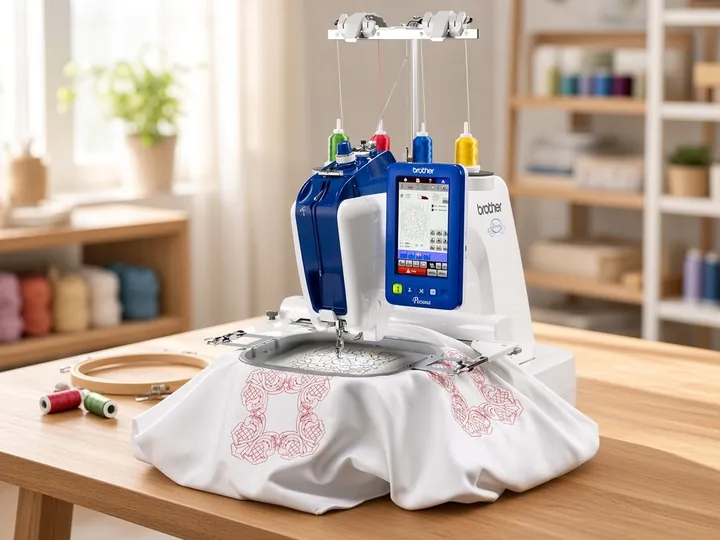 Brother Persona PRS1008" x 8" · 1 needle
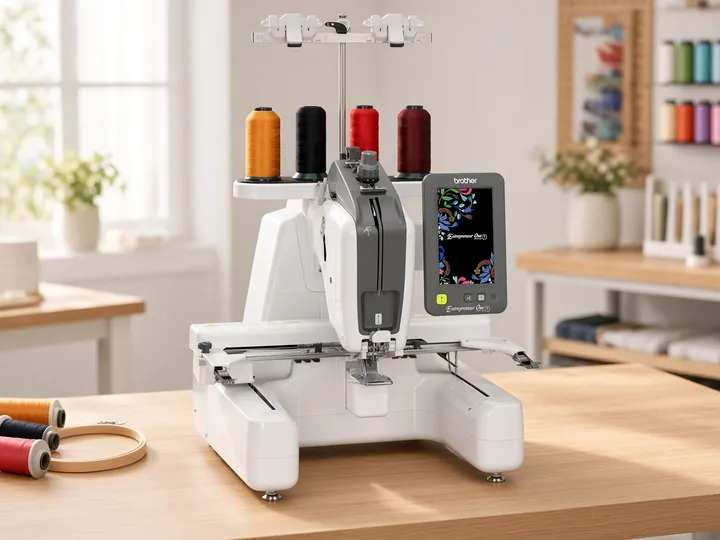 Brother Entrepreneur One PR1X8" x 12" · 1 needle
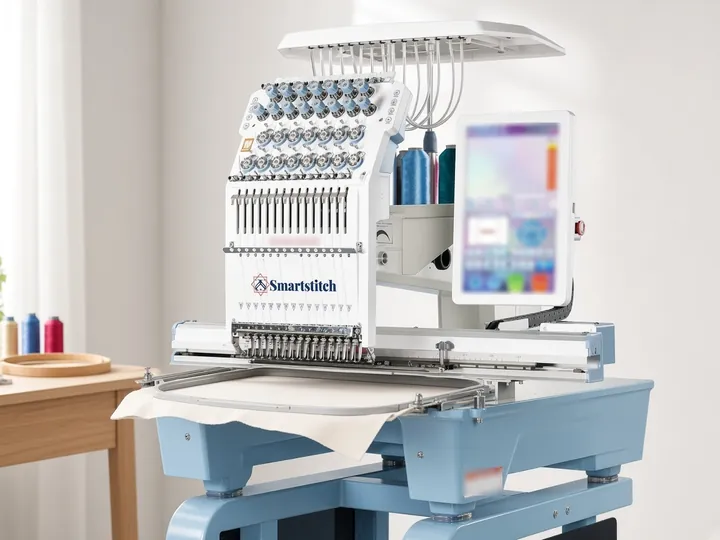 Smartstitch S-1501 Plus400 x 600 mm · 15 needles
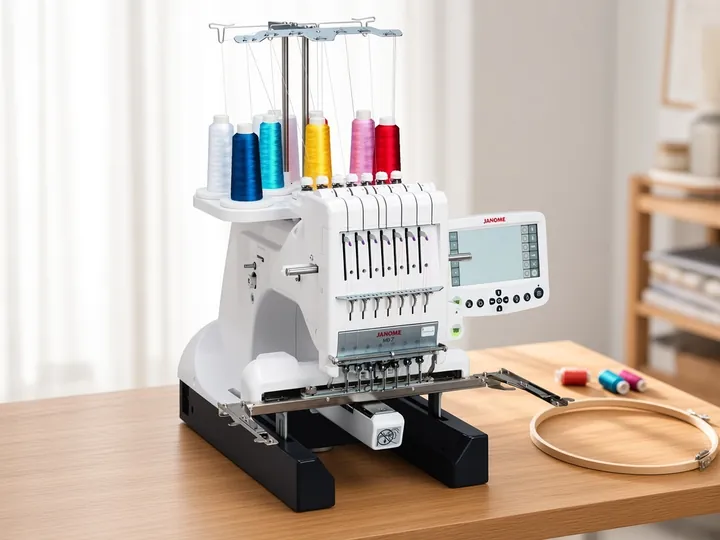 Janome MB-79.4" x 7.9" · 7 needles
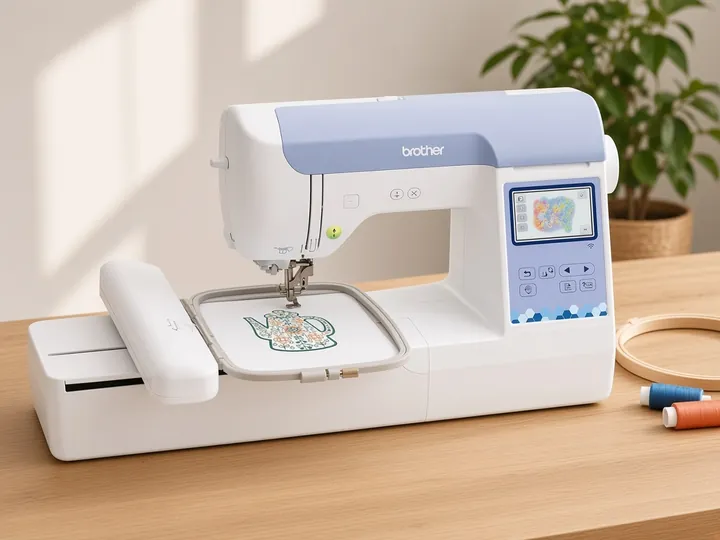 Brother PE9005" x 7" · 1 needle
Specs and price ranges were checked November 21, 2026 against manufacturer and retailer pages linked on each machine page. When you buy through our Amazon links we may earn a commission, which doesn't change what we include. Disclosure.